- Monday Morning Memo
- Posts
- Here We Go


Photo: NYS Assembly Majority
Good morning from Albany, New York, where all eyes are on the Senate and Assembly as we wait for their respective One-House Budget resolutions, expected later today. More on that below.
As we predicted last week, the U.S. Supreme Court intervened in New York’s redistricting fight, staying a lower court decision that would have likely flipped control of the 11th Congressional District from Republicans to Democrats. In January, a New York State Supreme Court judge ruled that the 11th District, which includes Staten Island and parts of Brooklyn, was drawn in a way that dilutes the power of Black and Latino voters in violation of the state Constitution. The timing of the Supreme Court’s intervention is a bit unusual given that the appeals process is still playing out in state court, but Justice Samuel Alito defended the timing in his decision, writing, “there is an unacceptably strong possibility that the applicants’ appeal in the state court system will not conclude until it is too late for us to review the ultimate decision.” Justice Sonia Sotomayor disagreed, writing in her dissent, “By granting these applications, the Court thrusts itself into the middle of every election-law dispute around the country, even as many States redraw their congressional maps ahead of the 2026 election. It also invites parties searching for a sympathetic ear to file emergency applications directly with this Court, without even bothering to ask the state courts first.”
The decision is a win for the GOP in general and Rep. Nicole Malliotakis in particular, as she would have faced an uphill reelection battle had the proposed redraw gone into effect.
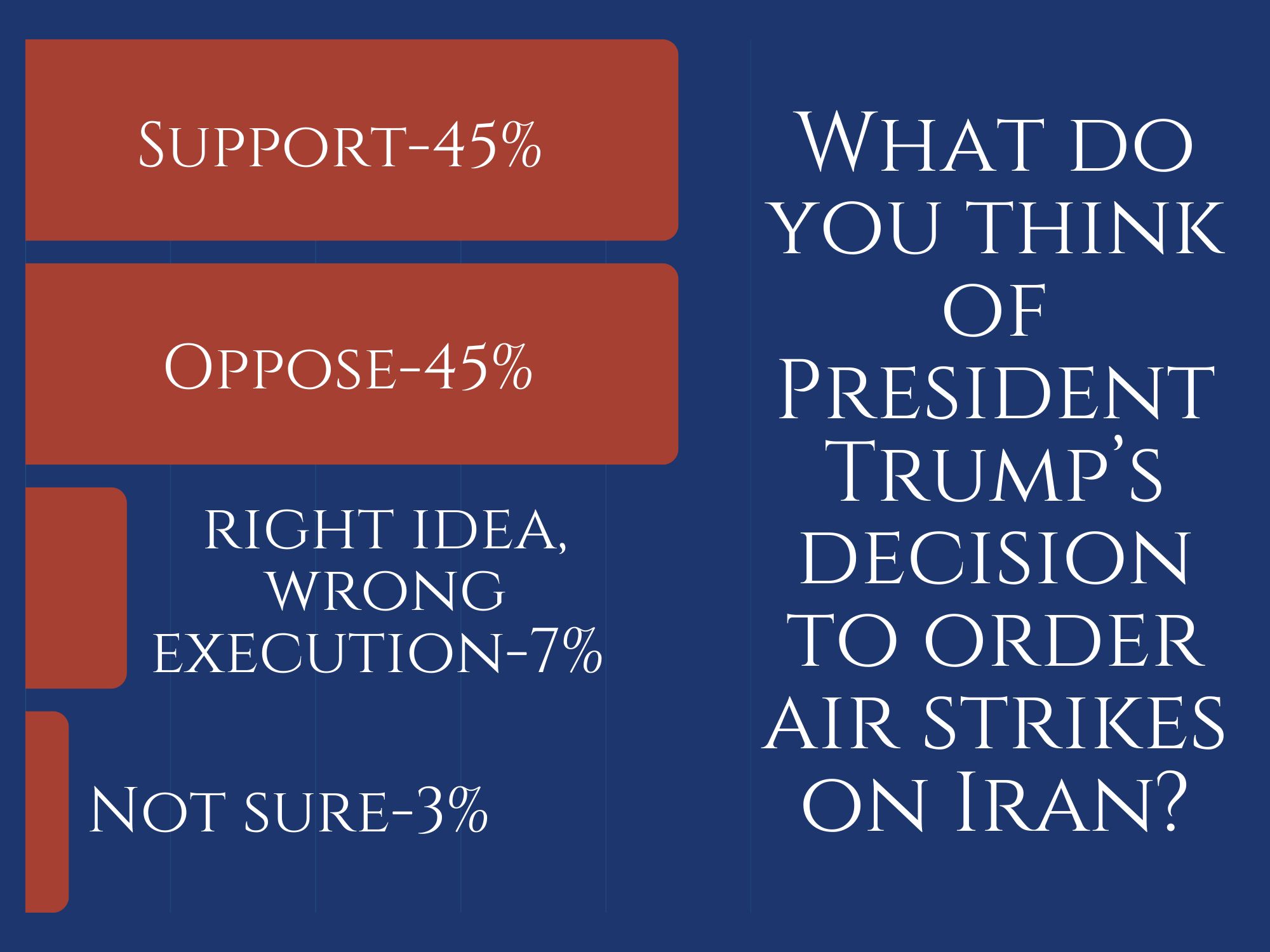
Did the U.S. Supreme Court make the right decision by pausing a redraw of Congressional District NY-11? Have your say in our poll below!
On social media, Malliotakis offered, “The plaintiffs in this case attempted to manipulate our state’s courts to use race as a weapon to rig our elections. That was wrong and, as demonstrated by today’s ruling, clearly unconstitutional. Unfortunately, the politicization of New York’s courts and its judges necessitated action from the nation’s highest court. I thank the Justices who stopped the voters on Staten Island and in Southern Brooklyn from being stripped of their ability to elect a representative who reflects their values.”
 | Your budget questions answered! OD&A’s Ralph R. Ortega, VP of Public Affairs, was in Midtown Manhattan as Citizens Budget Commission President Andrew Rein hosted New York State Budget Director Blake Washington for a wide-ranging conversation on New York’s fiscal future. |
In New York news, the Division of Budget (DOB), members from both Chambers of the Legislature, and the Comptroller’s office released their Consensus Economic and Revenue Forecast Report, a key milestone in the budget process that informs how much money lawmakers have to work with. There were some differences between the DOB and Democrats in the Legislature over revenue projections, with legislators suggesting receipts could be anywhere from $1.5 billion to $1.9 billion higher than originally projected by the DOB. In the end, the group came to a more conservative estimate, with the report concluding, “The revenue estimates from all parties for FY 2026 and projections for FY 2027 exhibited significant variance, but participants reached consensus on a two-year revenue total range that is $700 million to $800 million above the Executive Budget estimate.”
Nonetheless, lawmakers in the Senate and Assembly will include a proposal to increase personal income taxes in their budget resolutions this week, putting them at odds with Governor Kathy Hochul’s pledge of no new taxes. Proposing additional revenue raisers is nothing new for the state legislature, but the issue is particularly acute (and drawing additional scrutiny) this year, given New York City Mayor Zohran Mamdani’s support for the measure as well as his threats to raise property taxes in New York City if Albany does not increase tax rates on New Yorkers making over $1 million. Mamdani is also pushing for a hike in the corporate tax rate from 9% to 10.8% for financial firms and from 8.85% to 10.62% for non-financial firms. Senate Majority Leader Andrea Stewart-Cousins has remained noncommittal on the specifics of her conference’s tax proposals, but told reporters last week, “In general, we have always believed in this progressive tax structure. We’ve always put forth ways that we can meet the needs of New Yorkers.”
Jack on WBEN’S Hardline with Joe Beamer: 🥊Kristi Noem’s firing 🥊Siena poll: Governor’s race, energy fight, affordability 🥊Primary election in NY Senate District 61 & race for Rep. Elise Stefanik’s seat |

Increasing taxes on the wealthy is certainly politically popular, with a recent Siena poll finding New York voters support the Governor and Legislature allowing New York City to raise personal income taxes on City residents earning at least $1 million by a margin of 54-29%. Expect Hochul to continue to draw a line in the sand in opposition.
Another major point of disagreement between the Executive and the legislature is climate; lawmakers are waiting for the other shoe to drop after a memo released by the Hochul administration outlined the cost increases associated with implementing parts of the state’s 2019 Climate Leadership and Community Protection Act (CLCPA), specifically the provision known as "cap and invest.” Hochul has not yet publicly called for rollbacks to the CLCPA, but offered last week, “What I’m trying to do is sound the alarm. What I’m foreseeing, then, is for us to meet the goals on the timetable set by the Legislature. There’s going to be enormous costs to families.” Some of her top aides have met with leadership in the legislature and relevant committee chairs, but most lawmakers remain unconvinced or unclear on the next steps. Senate Majority Leader Andrea Stewart-Cousins said last week, “I just want to know what the proposal is, so at this point, I don’t know what there is to discuss. Obviously, there is a memo, and obviously, we are committed to affordability, and we have always said we want to do things right by the environment.” Assemblymember Deborah Glick, Chair of the Assembly Environmental Conservation Committee, is not in favor of watering down the CLCPA, especially if it is rushed through the budget process, telling reporters, “They have floated some trial balloons, most of which have gone pop,” later adding, “Every executive likes to use the pressure of the budget to hold the Legislature hostage. We should have a thorough discussion of where we are going. If anything, it should not be part of the budget.” Hochul has made affordability the centerpiece of her reelection campaign, and the associated costs of implementing the CLCPA, estimated at $4,000 for Upstate households and $2,300 for New York City households, would complicate her messaging.
Medicaid—and health spending in general—continues to rise, and there will be some budget issues, including changing policies to support realities around Medicaid coverage in the post-H.R.1 world, funding to support continued innovation in health systems throughout the state, investment of the remaining MCO tax revenue, as well as thornier policy issues such as the Governor’s proposed carveout of Medicaid from the Independent Dispute Resolution (IDR) Entity.

However, there is a broader consensus in Albany not to go too deep into these health issues in this (election) year. That détente does not extend to Washington: The United States Department of Justice announced a coming lawsuit against the Hochul administration for the handling of the state’s revamped Medicaid home care program. Last year, New York transitioned from hundreds of fiscal intermediaries to just one, Public Partnerships LLC (PPL), to run the Consumer Directed Personal Assistance Program (CDPAP) in an effort to find cost savings. DOJ is alleging that the process may not have been above board, focusing on allegations of bid rigging and noncompliance with Medicaid billing rules. Emails unearthed by the Empire Center show that two Hochul aides were discussing transition details with PPL several weeks before lawmakers formally approved the solicitation of bids. Hochul downplayed the lawsuit when asked about it last week, telling reporters, “I don’t know what they’re doing. This is the federal government. This is just another list of areas where they’re using their power to go after blue states only, blue states.” Hochul has stood by the controversial transition decision even as advocates, patients, and some Democratic lawmakers have expressed frustration and called for an extended window for the transition to PPL, citing the projected $1 billion in savings. DOJ has lost much of its professional luster, but Democratic legislators have also hit this issue and the Hochul administration very hard during this transition. Much more to come here.

The 2026 midterm campaign season continued in earnest last week, with Texas and North Carolina holding primary elections. In Texas, both Republicans and Democrats had high-profile, and extremely expensive, primary races for the Senate seat currently held by Senator John Cornyn. On the Democratic side, State Rep. James Talarico, a Presbyterian seminarian and former teacher, defeated two-term Rep. Jasmine Crockett 52.5% to 46.2% to be the Democratic nominee in November. Talarico, 36, campaigned on the need to draw in independents and moderate Republicans (and love), while Crockett focused on her brand as a fighter against Trump and Congressional Republicans. This split—growing the vote share by making inroads outside the party versus exciting the party’s base vote—is increasingly playing out in primaries across the country, and the details of this race—marked by extremely high turnout—bear further scrutiny.
Results were less definitive on the GOP side, with incumbent Senator John Cornyn and state attorney general Ken Paxton heading for a runoff after neither candidate received more than 50% of the vote. That runoff, scheduled for May 26th, is the worst-case scenario for the GOP, as both candidates will have to spend the next two months in an extended primary fight rather than focus time and resources on Talarico for the general. Paxon, who has been marred in corruption allegations and whose wife recently filed for divorce on “biblical grounds,” has portrayed himself as the anti-establishment candidate, telling his supporters last week, “We just sent a message, loud and clear, to Washington. We are not going to go quietly, and we are not going to let you buy the seat.”
Cornyn, who has been in the Senate since 2002, pointed to Paxton’s vulnerabilities in a general election, with his PAC saying in a statement, “Paxton's problems aren't just an issue in a Republican primary; they also threaten to put the Senate seat at risk due to his lack of strength against Democrat nominee Talarico.”
Trump is expected to make an endorsement in the coming days—hinting at endorsing Cornyn—and has called on the non-endorsed candidate to drop out so the party can focus on November. The voters most loyal to Trump have backed Paxon. Hmm.
The races were less competitive and controversial in North Carolina, with former Democratic Gov. Roy Cooper and former Republican National Committee Chair Michael Whatley easily winning their respective primaries. Recruiting Cooper to run was seen as a major get for Democrats, given that he has won statewide in a state that Trump won three times. Whatley got the Republican nod and Trump’s endorsement last year after the president’s daughter-in-law, Lara Trump, declined to run for the seat being vacated by Republican Senator Thom Tillis. North Carolina is one of the swingiest states and will be instrumental in deciding if Democrats can close the gap in the Senate next year, and the Cook Political Report currently scores the race as a true toss-up.
In a late plot twist, Montana Senator Steve Daines announced he will not be seeking reelection, becoming the sixth GOP Senator to bow out of Congress. In a statement, Daines said, “Serving the people of Montana in the U.S. House and U.S. Senate the past 13 years has been the greatest honor of my professional career, and I am grateful to God for allowing me to serve. After wrestling with this decision for months, I have decided I will not seek re-election.” Unlike his other colleagues, the process and timing of Daines’ decision to retire are raising some eyebrows. In an effort to avoid a pesky primary for his hand-picked successor, Daines withdrew his candidacy only minutes before the state’s filing deadline. Four minutes later, Montana U.S. Attorney Kurt Alme filed paperwork to succeed him. Seth Bodnar, the former president of the University of Montana running as an independent, criticized the move, saying, “Steve Daines has so little respect for Montana Republicans that he withdrew at the last minute to coronate his handpicked successor instead of giving them a voice at the ballot box.” This further ensured that no bigger-name Democrat would revisit the race (even though it seems clear now that none of them would have). When Democratic Rep. Jesús “Chuy” Garcia pulled a similar stunt last November, the GOP-led House of Representatives formally censured him for “undermining the process of a fair and free election.” Probably not worth holding your breath to see if the GOP-controlled Senate exercises any ideological consistency. Montana is also looking at an open House race after Congressman Ryan Zinke announced his retirement.
Finally, porch pirates are everywhere these days, but a Florida family got a thief no one saw coming. A Ring camera caught the culprit sniffing around the front door & going after a package. Check it out! |  |


 | 🎙️Blakeman’s recognition problem 🎙️Intensifying tax the rich fight 🎙️Bill to hike legislators’ salaries 🎙️SCOTUS redistricting ruling |
“Meet the Team” is our new podcast series highlighting the people who drive our firm’s success. This week, we hear from OD&A’s VP and Policy Director Jim Moore.
From healthcare funding to emerging tech, Jim works at the center of NY’s biggest issues. In this episode, we talk: 🎙️Storm recovery while serving in Sen. Schumer’s state office 🎙️The challenges facing healthcare nonprofits 🎙️Securing major funding wins 🎙️The Buffalo Sabres’ shot at a playoff run! |  |
 |  |




Did the U.S. Supreme Court make the right decision by pausing a redraw of Congressional District NY-11? |

 |  |  |


March 9, 1979: MLB orders all teams to grant female reporters equal locker room access. This followed a 1978 federal ruling in Ludtke v. Kuhn, which found that banning Sports Illustrated reporter Melissa Ludtke from the 1977 World Series locker rooms violated her 14th Amendment rights. |



 | Rochester is the No. 1 City in America for First-Time HomebuyersFind out how other Upstate NY cities stack up. |
Was our Monday Morning Memo forwarded to you? Subscribe here to get it sent right to your inbox.