- Monday Morning Memo
- Posts
- At Long Last


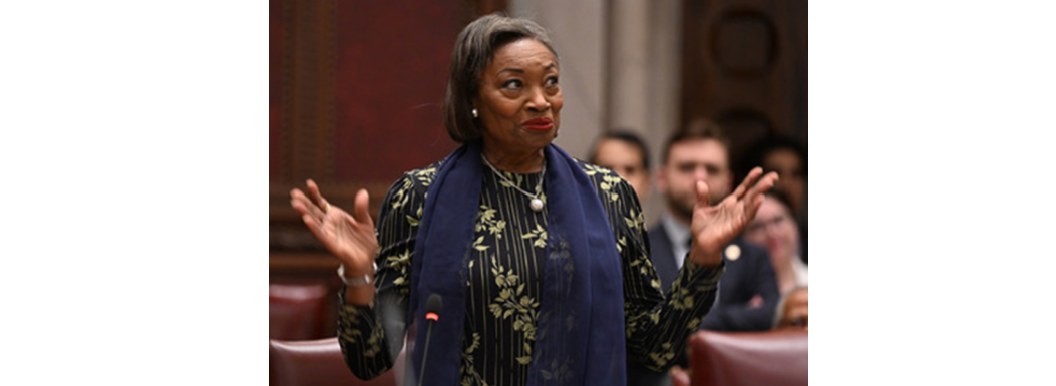
Good morning from Albany, New York, where bells should be ringing, lobbyists dancing, and legislators rejoicing in celebration of the successful adoption of the 2026/2027 New York State Budget. Instead, many of us are seized by the existential dread of . . . the end of session! There are only four days—including today—remaining in the scheduled legislative calendar. The legislature can always go into overtime (and likely will at least hit extra time), but as Senate Majority Leader Andrea Stewart-Cousins likes to say, “Trust the shaded boxes!” More on that below.
The budget was completed a mere 57 days after the original due date of April 1 and hit new heights with a $269 billion bottom line, significantly higher than the $260 billion originally proposed by Governor Kathy Hochul and about $15 billion over last year’s total spend. Significantly, that increase in spending comes without any increase in personal or corporate tax rates.
Here are a few highlights:
Climate & Energy
Hochul achieved a key goal with significant changes to the state’s Climate Leadership and Community Protection Act (CLCPA) despite the issue not being on the table at the start of budget negotiations. Nonetheless, Hochul successfully leveraged the budget process to ‘convince’ the legislature to delay the implementation of a greenhouse gas emission reduction program for another two years. The rollbacks also drop the 2030 deadline for a 40% reduction in emissions, set a new, non-binding 2040 target for a 60% reduction in emissions, and quite significantly change the formula used to calculate emissions, making it easier for the state to reach those goals.
In response to rising utility rates, the budget includes $1 billion for utility rebate checks, providing a one-time payment of $200 for joint filers and $100 for single filers. Utility companies will now also have to undergo a more stringent process with the Public Service Commission (PSC) to justify rate-increase requests. In addition to tying executive pay to new affordability metrics, utility companies will also have to provide the PSC with a second, “budget-constrained” proposal when seeking a rate increase.
This year’s budget will again include $1 billion for the Sustainability Futures Program, intended to support green job development and fund climate mitigation projects, despite Hochul omitting it from her original budget proposal. It also funds clean water infrastructure programs to the tune of $750 million and provides $450 million for the Environmental Protection Fund. The Empower+ program, which funds energy-efficiency upgrades for moderate- and low-income households, received $200 million in the final budget.
Education & Childcare
Overall, Foundation Aid rose to $27.4 billion, up $200 million from last year, with every school district receiving at least a 2% increase. The budget also made changes to the formula to give more weight to districts with students in foster care or experiencing homelessness, and to students who are English language learners. The budget delayed the state’s 2027 electric school bus mandate, giving districts an additional 5 years to begin purchasing zero-emission buses and until 2040 to operate only zero-emission buses. New York City Mayor Zohran Mamdani received a two-year extension on his control over New York City public schools, despite suggestions on the campaign trail that he would not seek a renewal of those powers. Separate, stand-alone legislation is expected to pass this week to defer and delay specific class-size mandates for NYC schools as well.
Furthermore, the state is providing $1.6 billion to achieve statewide universal pre-K, along with a requirement that school districts have enough seats for all interested 4-year-olds by the 2028-2029 school year. The budget also includes $1.2 billion in continued funding for the state’s childcare assistance voucher program for low and moderate-income families.
Housing
The final budget makes changes to the State Environmental Quality Review Act (SEQRA) that will wholly exempt certain projects from the very detailed review process in an effort to spur housing development. Under the new law, housing projects with up to 250 units in New York City, up to 300 units in other urban areas outside of New York City, and up to 100 units elsewhere in the state will be exempt from SEQRA. The exemption will also apply to certain park projects, public school construction in New York City, and water infrastructure projects. Lawmakers also authorized a renewal of an affordable housing tax credit that provides some landlords with a tax break equal to the cost of renovations.
Healthcare
Health and human services providers contracted with the state will see a 2.7% increase in payments, below the 4% requested by both the Senate and Assembly. To offset skyrocketing Medicaid costs, the state proposed a permanent tax on managed care organizations (MCOs), taxing Medicaid insurers 0.35% of total premium revenue each year. A temporary version of the MCO tax was included in the budget three years ago and has generated over $3 billion in revenue for the state, though the permanent tax is still subject to federal approval.
Auto Insurance
Hochul achieved much of the change she was pushing for on auto insurance, including redefining “serious injury” to reduce ballooning payouts to accident victims that are driving up insurance premiums. The budget further changes the law to bar an individual from receiving any compensation if they were found to be more than 50% liable for the crash. Lawmakers included provisions to prevent insurance companies from using an individual’s education level, homeownership status, zip code, or occupational status to determine premiums. Companies will also be barred from using “flex rating,” a practice whereby they can raise rates by up to 5% while the state debates final approval.
New York passed its state budget nearly two months after the deadline. Are you satisfied with the final result? Let us know in our poll below!
Immigration
On immigration, the budget bans local law enforcement agencies from entering into contracts to assist federal immigration authorities, known as 287(g) agreements, but does not go as far as banning all informal cooperation, as called for in the New York For All Act. The budget provides an avenue for New Yorkers to sue federal immigration authorities for alleged violation of their civil rights, retroactively effective to January 2025, and establishes sensitive locations, such as churches, schools, healthcare facilities, and private homes, where Immigration and Customs Enforcement (ICE) will be barred from entering without a signed judicial warrant. The state’s Office of New Americans was allocated $84 million—up $10 million from last year—to cover legal fees for people in immigration proceedings.
As mentioned above, the late budget has significantly reduced the time lawmakers have to consider standalone legislation. With both houses scheduled to gavel out for the year on Thursday, it is sure to be a whirlwind of a week as members and advocates make their last-ditch efforts to get legislation across the finish line and, just as often, put their skills to work to stop legislation short. As we have highlighted in past memos, the “Protecting Consumers and Jobs from Discriminatory Pricing Act” sponsored by Senate Deputy Majority Leader Mike Gianaris and Assemblymember Michaelle Solages continues to gain momentum since passing the Senate in May. The bill prohibits the use of electronic shelf labels and surveillance pricing in retail food and drug establishments and is a top legislative priority of New York Attorney General Letitia James.
Lawmakers are also set to consider high-profile recycling legislation known as the Packaging Reduction and Recycling Infrastructure Act. The sponsors, Senator Pete Harckham and Assemblymember Deborah Glick, and environmental advocates are eager to advance landmark climate legislation against the backdrop of rollbacks to the Climate Leadership and Community Protection Act (CLCPA), and are hoping that recent amendments will assuage the concerns that prevented the bill from receiving a vote in the Assembly last year—all signs point to a vote on this one, but that’s not set in stone.

In addition, data privacy advocates are pushing the New York Privacy Act, which would require companies to obtain affirmative consent before processing a user’s personal data and another bill, the New York Health Information Privacy Act, which was vetoed by Hochul last year, but has since been amended to take a narrower approach, including exceptions for data already governed by other regulations and restricting protections to health data collected while an individual is physically in New York. Gianaris and Assemblyman Alex Bores had a late introduction last week, proposing legislation to levy a 100% tax on any New Yorker who receives a payment from the “Anti-Weaponization Fund” that was established by President Donald Trump to compensate “victims of lawfare and weaponization,” including those convicted of crimes on January 6th, 2021.
The better part of one of the remaining days is likely to be used to advance a pair of constitutional amendments that would allow New York to enter the national redistricting fray. The first amendment would allow the state to engage in mid-decade redistricting and change how voting occurs on the Independent Redistricting Commission (IRC) to prevent the body’s five Democrats and five Republicans from deadlocking. The second amendment would change the broader constitutional language that restricts partisan gerrymandering, potentially setting up a scenario where Democrats are favored in 23 of the state’s 26 congressional districts. However, a new map would not take effect until 2028 at the earliest and would also require approval in a statewide vote in the Fall of 2027. Discussions are also underway to pass judicial district legislation, something akin to last year’s legislation that earned the rare distinction of being pocket-vetoed by Hochul.

Redistricting continues to be the order of the day across the country as well. In Alabama, state officials are elevating their redistricting fight to the United States Supreme Court after a lower federal court blocked the state from implementing a congressional map drawn in 2023. The new map would likely result in a 6-1 Congressional District split for Republicans and would eliminate one of the state’s two majority Black districts, which are both currently held by Democrats.
Florida appears to be well on its way to implementing the new partisan map proposed by Governor Ron DeSantis and approved by the Legislature in late April. A Florida Circuit Court judge declined to block the new map for the 2026 elections, citing time constraints, “The election machinery of the state is already underway. The primary is less than three months away, and the general is less than six months.” The ruling is not the last legal challenge the new map will face, but it provides a much smoother path for DeSantis and his Republican allies.
Louisiana, which brought the original redistricting case to the Supreme Court that ultimately gutted the Voting Rights Act, approved a new map last week that will eliminate one of the two majority-Black districts in the state and will likely give the GOP a 5-1 advantage, compared to the current 4-2 makeup.
South Carolina Republicans, in defiance of President Donald Trump, officially killed a plan to draw a new map that would have eliminated the state’s lone Democratic seat. The Republicans who thumbed their nose at Trump could face the same fate as Republican lawmakers in Indiana who voted to forgo partisan redistricting and subsequently lost primary elections to Trump-backed challengers. Worth watching.
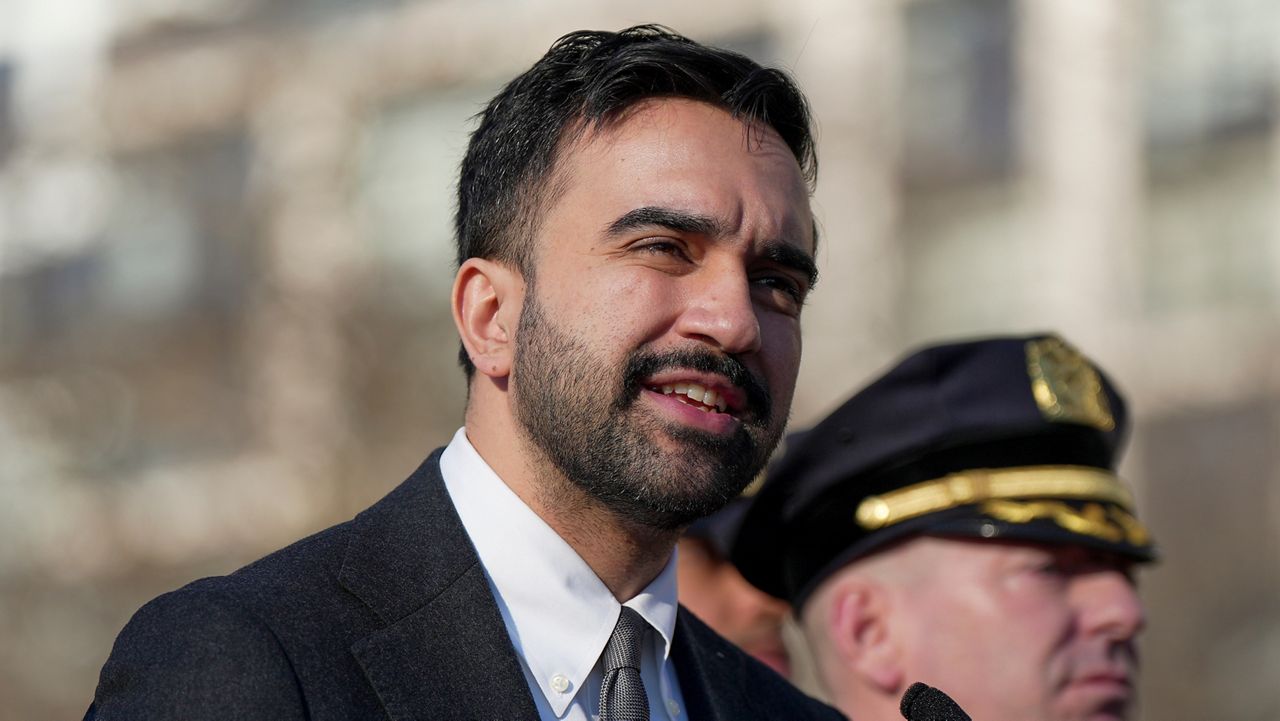
In New York political news, Mamdani made a cable news appearance on Thursday alongside Darializa Avila Chevalier, a fellow member of the Democratic Socialists of America, to endorse her primary campaign against sitting Democratic Rep. Adriano Espaillat in the 13th Congressional District. Along with his endorsement, Mamdani offered, “It will take a new generation of leadership to ensure that the heartbeat of this party is once again the struggles of the working class, and in electing a champion like Darializa to represent Uptown Manhattan and the Bronx, we could have exactly that in Congress.” Espaillat, who chairs the influential Congressional Hispanic Caucus, has represented the district since 2017 and was the first formerly undocumented Member of Congress. Mamdani's endorsement was met by Governor Hochul just one day later, endorsing Espaillat and setting up yet another political proxy war with the first-term mayor. On social media, Hochul said, Congressman Espaillat has delivered real results to improve the lives of New York families. I’m proud to support my friend, and know he’ll continue putting New Yorkers first and being a leading voice for our communities in Congress.” Hochul and Mamdani are on opposite sides of the NY-10 Primary as well, with Hochul endorsing incumbent Dan Goldman and Mamdani backing New York City Comptroller Brad Lander.
A decision in the lower courts overturning a Public Campaign Finance Board decision denying Republican gubernatorial candidate Bruce Blakeman access to matching funds was reaffirmed, dismissing the Finance Board's appeal and potentially unlocking up to $4 million in public funding for Blakeman. The cash is much needed for the Blakeman campaign, which is millions of dollars behind Hochul’s $20 million plus cash on hand. Speaking to the press, Blakeman said, “We all knew from day one that this was dirty politics. That this was something that was done to try and frustrate our ability to get matching funds, even though we complied with everything that was required under the statute.”
In Texas, state Attorney General Ken Paxton easily won the Republican primary runoff against incumbent Republican Senator John Cornyn. The result was largely expected after Trump, much to the chagrin of other GOP senators and the national party, endorsed Paxton over Cornyn late in the race. Many Republicans fear that the race to hold the seat against Democratic state Senator James Talarico will now be much more competitive and much more expensive than it would have been for Cornyn. Paxton has had a slew of legal and ethical challenges while in office, leading to his fellow Republicans to impeach him in 2023, though he was ultimately acquitted in the Senate. There were also runoff primary elections on the House side, in which two incumbents lost their seats. Freshman Rep. Christian Menefee soundly defeated longtime incumbent Representative Al Green by more than a 2-to-1 margin after redistricting pitted the two Democrats against each other. Former U.S. Representative Colin Allred—who dropped out of his 2026 U.S. Senate bid to run for the House—unseated incumbent Representative Julie Johnson, with approximately 54% of the vote.
 | OD&A’s Ralph Ortega goes 'On the Record’ with what you need to know about the 2026 primary contests across New York state. The June 23rd election is less than a month away, and OD&A is keeping a close watch on the hottest races. Read the first in a series of primary election previews here. |
In an exciting development, New York took the next formal step toward submitting a bid to host the Winter Olympics in New York City and Lake Placid. This idea continues to gain support and rightfully so. Kudos to MOA Bobby Carroll for getting this started and Governor Hochul for advancing it further.
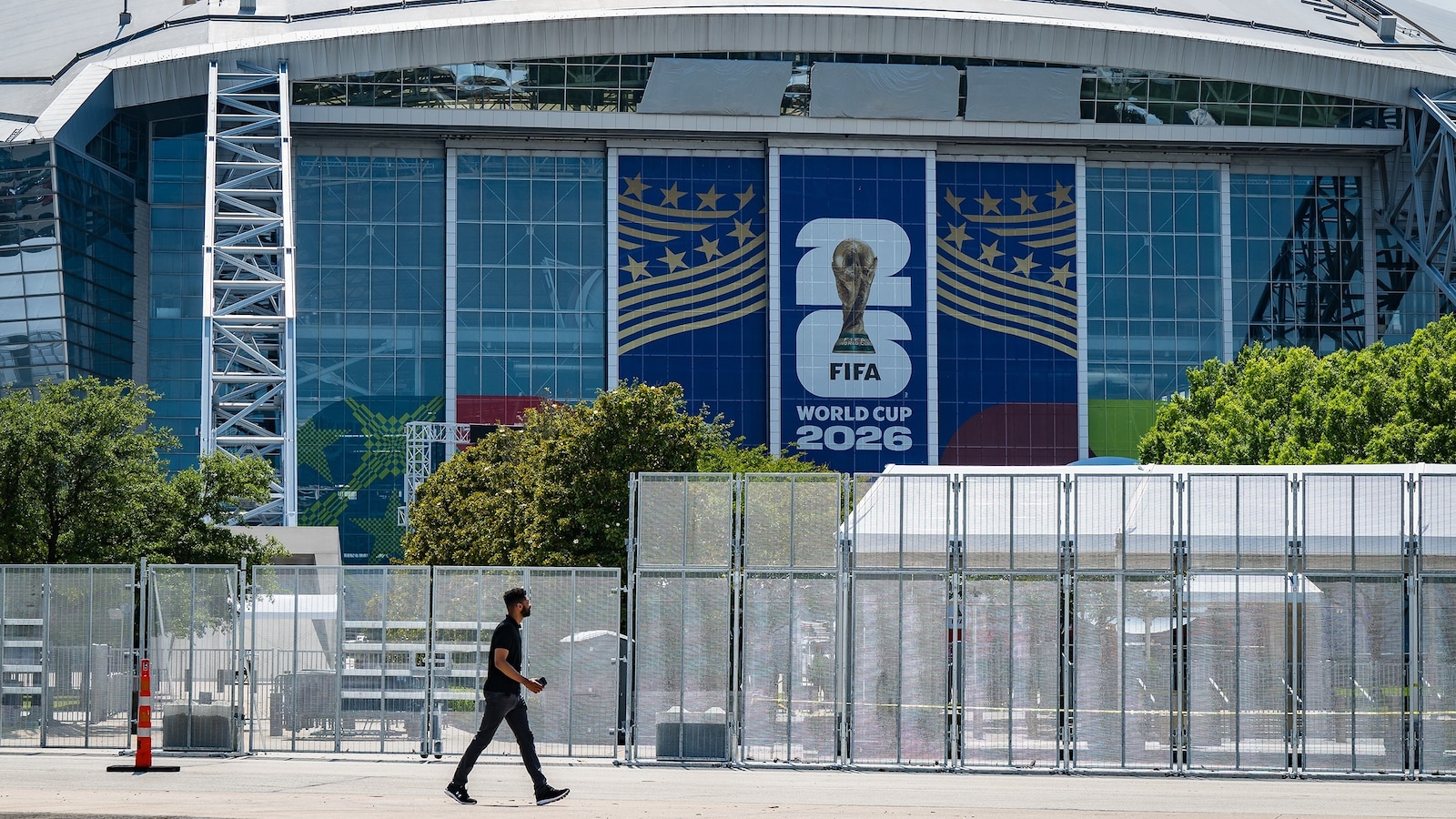
If you’re like us, you’re very excited about the World Cup. Either way, it’s worth flagging these three videos: Come Together, England’s team reveal, Brazil’s Hexa Mission, and this official song from Bosnia. It’s a banger.
Finally, the Libertarian Party is staying true to its roots and pushing back against restrictive mandates, even from their own. Its latest battle over personal freedom? A call for a dress code at its convention. Read on! |  Facebook photo |


 | 🎙️ Why it didn’t have to be this late 🎙️ Should the budget deadline be extended? 🎙️ Advice for next session |

Go beyond the resumes and titles and get to know the people behind the work at O'Donnell & Associates with our Meet the Team podcast series. Listen as we go ‘From the Lobby’ with candid conversations on politics, government, and life beyond the office. Catch every episode on our employee bio pages here!
 |  |


New York passed its state budget nearly two months after the deadline. Are you satisfied with the final result? |



June 1, 1980: CNN (Cable News Network) launched from its headquarters in Atlanta, Georgia, as the world's first 24-hour, all-television news network. Read more! |



 | Three New York Communities Among Best Places to Live in U.S.The rankings are based on quality of life, job market strength, value, and residents’ desire to live in each area. Read on! |
Was our Monday Morning Memo forwarded to you? Subscribe here to get it sent right to your inbox.