- Monday Morning Memo
- Posts
- Governor's Gambit


Good morning from Buffalo, New York.
Last week, Governor Kathy Hochul took a decisive turn, signing an Executive Order to enact the nation’s first state-level moratorium on hyperscale data centers, citing concerns about the environmental and fiscal impacts on local communities. Hochul explained, “New York has always been at the forefront of innovation and change, but we’ve also always guaranteed that New Yorkers benefit. As data center development threatens to hike up utility bills, deplete our natural resources, and create uncertainty for New Yorkers, it’s my responsibility to take action and lead. New York will lead the way in creating the strongest standards in the nation for data center development, ensuring that when companies succeed because of New York, New Yorkers succeed too.”
The moratorium took immediate effect, stopping the NYS Department of Environmental Conservation (DEC) from issuing new permits for data centers with a peak load of 50 MW or more. The moratorium will remain in place until the NYS Department of Public Service (DPS) completes a Generic Environmental Impact Statement (GEIS) to establish a set of consistent standards for future data center construction.
Do you support Governor Hochul's decision to temporarily halt permits for new, large data centers in New York while the state develops new environmental and energy standards? Vote in our poll below!
The EO further directs Empire State Development (ESD) to develop a Community Investment Framework to guide municipalities on potential public benefits to be negotiated with data center developers and operators. DPS is also directed to evaluate a Grid Acceleration Fund—paid into by data centers—to ensure the costs associated with grid improvements are not being passed on to other ratepayers.
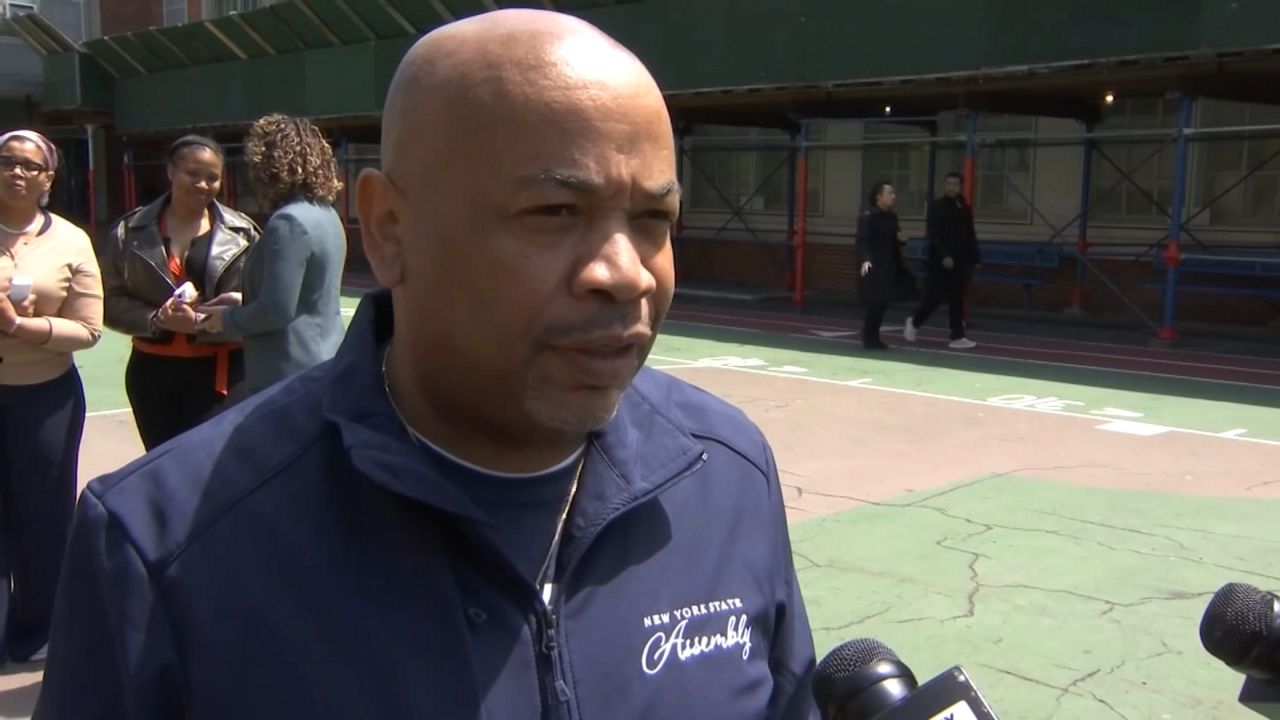
Hochul’s Executive Order is intended to represent a middle ground in comparison to the Responsible Data Center Development Act, passed by the Legislature earlier this year, which would require data centers to establish their own power generation and create a new service classification for data centers. Still, many industry stakeholders fear this is the opening salvo in a growing national movement to placate voters skeptical of the benefits of data centers, or simply to fuel the inflamed debate courtesy of Russia and China.

Caleb Max, CEO of the National Artificial Intelligence Association, offered, “I think we’re just kind of at the cusp of probably dozens [of states], if I have to be honest. If the industry doesn’t wake up quick and start solving this, it’s going to get a lot worse.” Hochul’s EO has further united business groups—many of whom are invested in ongoing data center construction and others who see the decision as further eroding New York’s business climate—and labor groups, who recognize the construction of data centers as one of the biggest drivers of construction jobs in New York State.
Other warning signs for New York’s business and economic climate were raised in a report from New York State Comptroller Tom DiNapoli that offered further proof of what many residents are feeling anecdotally: the accelerating flight of taxpayers from New York. The OSC report demonstrates that the pandemic-era lockdowns had a drastic effect on New York’s outmigration, with 112,458 tax filers—roughly one in every 100 resident taxpayers—leaving the state in 2020 alone. Between 2021 and 2024, another 95,679 net taxpayers left New York. According to the report, “The greatest net loss of taxpayers was among married filers with incomes between $100,000 and $500,000—a net loss of 8,200, or more than half of the total net out-migration, in 2024.”

DiNapoli pointed to “one positive post-pandemic trend:” an influx of single tax filers, including many of the young progressives who helped propel Zohran Mamdani to victory and who supported many of his socialist allies in competitive congressional primaries last month. Hochul conceded that there is work to do to reverse the trend, but pointed to extraneous factors and federal actions that exacerbated the problem. On Fox 5's "Good Day New York,” Hochul offered, “Back then, a big driver of people leaving, and you could draw a through line from when the Donald Trump administration and Congress got rid of the State and Local Tax Deduction. All of a sudden, everybody in New York paid higher taxes because, since Abraham Lincoln was president and they started the tax code, you never were double taxed.”
In similar news, the Citizens Budget Commission (CBC) unveiled an insightful dashboard with data on New York’s population loss and the subsequent impact on economic activity. The dashboard shows that New York lost more millionaires than any other state from 2010 to 2022, and every other state has gained more residents from New York than it lost to New York. It also found that despite mediocre test scores, New York spends more per-student on public education than any other state. Andrew Rein, the president of the CBC, said, “When you see the population shrink, we lose power in Washington. But what you also need to see—and this is where the Value Proposition Tracker shines that light—is how many people left, where they went, and how much money they're earning somewhere else instead of here.” There are a few silver linings in the data, including that New York attracts more college freshman every year than it loses, and identifies a “growth corridor” with positive economic trends that extends from New York City and Long Island up to the Capital Region. These are both important trends to watch.
OD&A’s End-of-Session Bill Summary highlights the key legislation that crossed the finish line and the issues likely to shape the months ahead. Check it out here, and if you have questions or would like to discuss what it means for your organization, let’s chat! |  |
In case you missed it, the New York City Council officially voted to give themselves an 18% raise. We covered the practical and political considerations in-depth in last week’s Monday Morning Memo.

In political news, campaign finance reports filed last week with the state Board of Elections provided new insight into the finances of the Hochul and Blakeman campaigns as November’s election draws closer. Hochul remains on strong footing with $21 million on hand, and another $22 million in the coffers of the New York Democratic Party. Those accounts were bolstered by a $1.5 million donation from the Greater New York Hospital Association, as well as six-figure donations from Airbnb, Doordash, Coinbase, and the New York Apartment Association. Blakeman’s report was quite underwhelming; one campaign official told reporters that the Nassau County Executive had raised $11 million… however, the actual report shows only $4.1 million on hand. Certainly not enough to run a competitive statewide campaign. The campaign indicated that they intend to file an amended report to reflect public matching funds, but no amendment has been filed yet... stay tuned.

For everyone who thinks their vote does not matter, this week offered further evidence that every vote counts: two state Assembly races were decided in very close recounts. David Siffert, a lawyer and progressive activist, declared victory over Jeannine Kiely in the race to replace retiring Assembly Member Deborah Glick in lower Manhattan’s Assembly District 66. The recount found Siffert won by a mere 15 votes out of the 17,000 votes cast in the June Primary. Patrick Martinez, the pick of the Queens Democratic establishment, declared victory over Mamdani ally and former New York City Police Detective Shamsul Haque after the recount found him victorious by an even closer margin of 7 votes out of the 6,000 ballots cast in June.

More contentiously, the Department of Homeland Security and ICE are turning their attention to the Empire State, prompting Hochul to send a letter to Homeland Security Secretary Markwayne Mullin seeking an explanation for the increased enforcement actions in New York. In the letter, Hochul wrote, “Over the past several weeks, New Yorkers have learned about three separate federal immigration detention projects planned for our state. But they didn’t hear about them from your administration. They learned from press reports and procurement records uncovered after the fact. You have repeatedly promised to coordinate with local communities. That’s not what’s happening.” The letter was in response to media reports that ICE has signed a lease for a warehouse in Newburgh, will be expanding its 650-bed Buffalo detention facility, and is adding immigration detention cells to a federal office building. Border Czar Tom Homan has made no secret of his desire to ramp up immigration enforcement in New York, though ICE declined to get into the specifics of their enforcement efforts, saying in a statement, “ICE will not confirm office locations as our officers are facing a coordinated campaign of violence against them, including an 8,000% increase in death threats against them and a 1,300% increase in assaults against them.”
Another area where Washington and Albany are at odds is the future of an expanded Medicaid program, known as the New York Health Equity Reform initiative. New York is seeking a five-year extension of the $7.5 billion initiative that provides health-related wraparound services for Medicaid recipients and proposes rolling over unspent federal dollars rather than seeking additional funding. The current waiver is set to expire on March 31, 2027, but New York has to slog through an extended public comment period before submitting a final application to the federal government. The decision could have major implications for New York’s fiscal health given that Medicaid spending is a huge part of the state’s annual budget. A recent report from Comptroller Tom DiNapoli raised concerns about the long-term fiscal sustainability of New York’s budget, highlighting Medicaid spending, which now accounts for 26.5% of State Operating Funds (SOF), as a major driver of instability. We will be watching this closely through next year’s budget process.
In Congress, the House Budget Committee voted along party lines to advance a budget reconciliation package that would unlock $95 billion to deliver the funding President Donald Trump has demanded for the military, farmers, and election integrity, among other priorities.

The partisan spending package would provide up to $73 billion for the Pentagon, $12 billion in farm assistance, and another $10 billion in grants to states to incentivize strict voter ID laws. While House GOP leadership hopes to jam the package through before the August recess, fiscal hawks have taken issue with the price tag and the lack of spending reductions or offsets to cover the $95 billion in costs. Republican Rep. Chip Roy of Texas offered, “The stupidest thing to do would be to try to jam it through committee when you’ve got bigger problem[s] on the House floor.” Even if Johnson can strong-arm the package through the House, the bill faces intense skepticism in the Senate, where lawmakers will almost certainly seek to alter its scope. Senator Thom Tillis (R-NC) said, “If I see a reconciliation bill come from the House with another failed attempt to confuse this election, I will use every device I have available to slow down the wheels of government until people cop a clue and do the math.” Congress is also running short on time to begin the traditional federal appropriations process. There are only seven weeks of Congress scheduled to be in session before the midterms, and the House has advanced only two of the twelve individual appropriations bills that make up a federal spending bill. Whew.
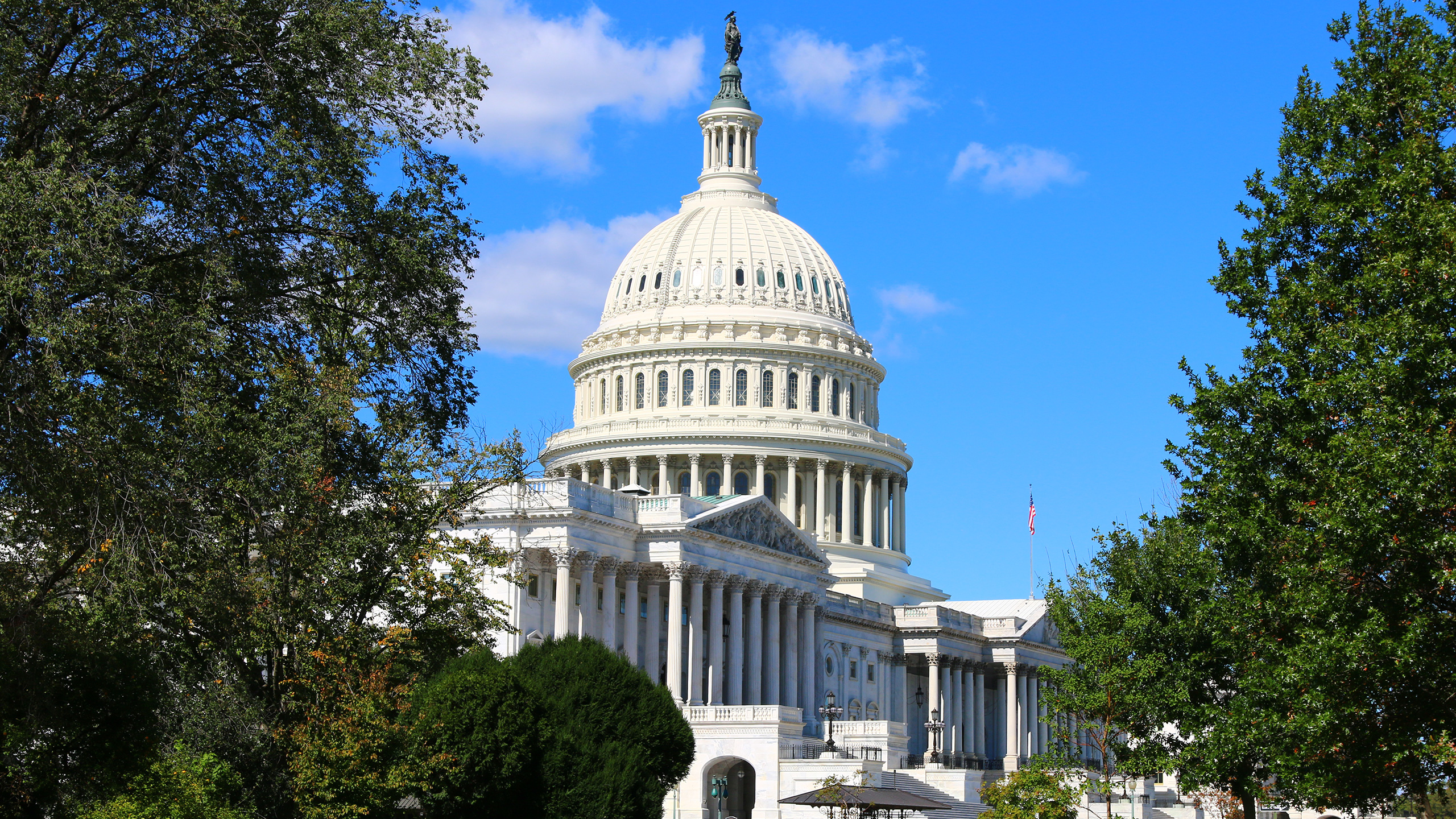
After President Donald Trump’s primetime address last week re-airing his grievances with the 2020 election, House Democrats, led by friend of the firm, Congressman Joe Morelle, have begun strategizing how to combat similar election-related conspiracies heading into November and beyond. Joe is certainly the right man for the job.
Finally, the market for fossilized dinosaurs is alive and well. A rare dinosaur skeleton just stomped into the record books, selling for an astonishing $50.1 million at auction. |


 | 🎙️Blakeman’s campaign cash controversy 🎙️Is NY’s new budget a bust? 🎙️World Cup impact |

Go beyond the resumes and titles and get to know the people behind the work at O'Donnell & Associates with our Meet the Team podcast series. Listen as we go ‘From the Lobby’ with candid conversations on politics, government, and life beyond the office. Catch every episode on our employee bio pages here!
 |  |


 | As demand for services grew, OD&A client, AIDS Healthcare Foundation, responded with a new pharmacy near its Hell’s Kitchen facility to better serve its expanding patient population. OD&A’s VP of Public Affairs, Ralph R. Ortega, goes “On the Record” with the AHF team to discuss the launch and how the new pharmacy will improve access to care. Read on! |


Retired local union leader Richard Lipsitz and Assemblyman Bill Conrad
The only thing better than a summer BBQ? Pairing it with great conversations. OD&A was proud to join Assemblyman Bill Conrad at his End-of-Session Summer Picnic, a fundraiser for his reelection campaign. Thank you for bringing everyone together for an evening of great food, great company, and community!
Welcome to Summer Vibes! ☀️
Throughout the summer, we'll be asking the O'Donnell & Associates team about their favorite reads, must-watch shows, go-to summer foods, vacation plans, and more. Follow along for a little seasonal inspiration and a fun look at how our hardworking staff makes the most of summer, too!

With summer here, I've been trying to enjoy some of this beautiful Upstate weather by getting outside. For me, this usually means going on some long walks or hikes, and playing as much golf as I can. I've also really enjoyed watching the World Cup. I was rooting for the USA, but I also have a soft spot for England.
I can't wait to join my family for our annual trip to Cape Cod this summer. I love eating some fresh seafood while I'm there, and plenty of cookie dough ice cream. (Or any other flavor... I'm not picky!)
I'm looking forward to using some time on the beach to finish reading The Demon of Unrest by Erik Larson. Most of all, I'm excited for some family time! It's always a fun week with everyone in the same place. |  |
Peter is an Associate at OD&A’s Albany office. Learn more about him here!

Do you support Governor Hochul's decision to temporarily halt permits for new, large data centers in New York while the state develops new environmental and energy standards? |


 |  |  |


July 20, 1969: Apollo 11's Eagle lunar module landed on the Moon, where Neil Armstrong and Buzz Aldrin made history as the first humans to walk on its surface. Look back here! |



 | NYC’s Best New StoriesCountless books have used New York City as their backdrop. These new releases capture the city's unmistakable energy, colorful characters, and one-of-a-kind spirit. |
Was our Monday Morning Memo forwarded to you? Subscribe here to get it sent right to your inbox.