- Monday Morning Memo
- Posts
- Decision Time


Good morning from Albany, New York, where the 2025 Legislative Session business is almost completed for the year!
Governor Kathy Hochul called up over 100 bills last week, including a high-profile measure that will permit doctors to assist terminally ill patients in ending their own lives. Hochul ultimately decided to support the controversial bill, known as Medical Aid in Dying, after weeks of negotiations with the sponsors, but said it was “one of the toughest decisions” she has made as Governor. Speaking on her decision, Hochul offered, “I can’t stand here—even as a Catholic and say I can’t allow someone else to do something that I perhaps would not do. I cannot stand in their way. I’m hoping that [our faith leaders] give me some grace to pray for me—as all of them said they would do—as we continue to focus on issues affecting the living.”
The legislation allows doctors to prescribe life-ending medication to terminally ill patients with less than six months to live, and includes guardrails such as a residency requirement, a five-day waiting period, and a requirement that the patient submit an audio or video recording of their request for the lethal medication. The Archdiocese of New York, along with the Bishops of New York State, expressed their disappointment with Hochul’s decision, saying in a statement, “This new law signals our government’s abandonment of its most vulnerable citizens, telling people who are sick or disabled that suicide in their case is not only acceptable, but is encouraged by our elected leaders. Tragically, this new law will seriously undermine all of the anti-suicide and mental health care investments Governor Hochul has made through her tenure.”
Hochul also made national news, signing the Responsible AI Safety and Education (RAISE) Act, a nation-leading safety and transparency framework for frontier artificial intelligence models aimed at mitigating potential catastrophic risks from the most powerful models, while ensuring New York can continue to be a leading home and site of advancement for the AI industry. The final bill will require developers of frontier AI models to publish a safety and security plan on how the company identifies, assesses, and mitigates catastrophic risks. Perhaps most importantly, the bill creates a first-of-its-kind regulator of frontier models, which will be an office under the Department of Financial Services. That Office will submit annual reports to the Governor and the Legislature recommending potential updates to reflect rapid advancements in AI. The legislation is a major win for its sponsors—Assembly Member Alex Bores and Senator Andrew Gounardes—who both helped lift the bill past major opposition from well-funded and deeply entrenched opponents. It is also a historic win for our client, Secure AI Project, and for the OD&A team who led the advocacy efforts on this initiative.
In a big win for New York State Attorney General Tish James, Hochul approved the FAIR Business Practices Act, subject to a significant chapter amendment. This legislation significantly expands the Attorney General’s consumer protection powers. Much of this conversation has been driven by former Federal Trade Commission Chair Lina Khan—currently a member of the Mamdani transition team—for states to strengthen their consumer protection laws in response to federal regulatory rollbacks by the Trump administration. In a statement after the signing, James said, “I am proud to have worked alongside Senator Comrie and Assemblymember Lasher to update our most important consumer protection law for the first time in 45 years to stop predatory lenders, abusive debt collectors, dishonest mortgage servicers, and so much more. At a time when the federal government is abandoning working people and raising the cost of living, this law will help us stop companies from taking advantage of New Yorkers.”
In a win for environmental advocates, Hochul signed legislation ending the “100-foot rule,” which requires existing ratepayers to subsidize the first 100 feet of new natural gas lines. In a statement, Hochul said, “It’s simply unfair, especially when so many people are struggling right now, to expect existing utility ratepayers to foot the bill for a gas hookup at a brand new house that is not their own. I have made affordability a top priority, and doing away with this 40-year-old subsidy that has outlived its purpose will help with that.” Under the new law, which goes into effect in 12 months, utilities will still have an “obligation to serve” new residential hookups, but shifts the cost to the applicant rather than current ratepayers.
Hochul signed a prison reform package after reaching a deal with lawmakers and the state Department of Corrections and Community Supervision (DOCCS) on the bill’s final language. The new law will require prisons and local jails to have 24-hour surveillance cameras in all areas of the jail, except showers and the interior of cells. The final agreement omits the original mandate to provide footage of a prison death to the state attorney general’s office within 72 hours, instead requiring prison officials to make “a good faith effort” to provide the footage. The new law also mandates DOCCS to notify the next of kin of the death of a person in prison within 48 hours, up from the 24 hours as initially proposed. Senator Julia Salazar, Senate Crime Victims, Crime and Correction Committee Chair, said in a statement, “Although the to-be-enacted bill does not include everything we had hoped for, it is nonetheless a serious step toward making New York state prisons less violent. For too long, our prisons have been plagued by staff abuse toward incarcerated individuals, with little to no recourse.”
There were plenty of vetoes from Hochul’s office as well, including the Health Information Privacy Act, which advocates say would have strengthened privacy protections for individuals seeking gender-affirming care and reproductive healthcare. The measure would have regulated the collection and selling of health information by third parties and would require additional disclosures when regulated health information is processed. The bill was heavily lobbied against by the Business Council and over 50 other organizations.
In a surprise to many, especially the bill’s sponsors, Hochul vetoed legislation that would have required LLCs to disclose more information about their actual owners. Hochul signed similar legislation two years ago, but actions from the Trump administration required lawmakers to make minor changes to ensure the law achieves its original intent. Assembly Sponsor Emily Gallagher did not pull any punches in her criticism of Hochul: “The governor likes to pay lip service to the pressure that she feels from the left, but she has absolutely no vested interest in the left being successful. And she has a deep vested interest in the billionaires continuing to be able to exploit people in this state.” Hochul’s standing and cooperation with the Left will be a major factor we are watching in 2026.
In the biggest surprise of the season, Rep. Elise Stefanik dropped her bid for Governor of New York after formally entering the race just over one month ago. In a statement on social media, Stefanik said she was dropping out to be more present with her son and to avoid a protracted GOP primary contest, offering, “While we would have overwhelmingly won this primary, it is not an effective use of our time or your generous resources to spend the first half of next year in an unnecessary and protracted Republican primary, especially in a challenging state like New York.” This explainer is worth a read: Elise Stefanik Tried Everything to Please Trump. He Still Jilted Her.
We asked Memo readers which candidate they would support if the 2026 General Election for New York governor were held today. Scroll down for results and comments!
Stefanik’s announcement leaves Nassau County Executive Bruce Blakeman as the lone Republican candidate. Stefanik had the money and name recognition and momentum to win a primary and make the campaign interesting. Blakeman offers different challenges. He is an executive and has been strong on several wedge issues, notably banning transgender athletes from high school sports in Nassau County. Blakeman is also a moderate on abortion, a position that will appeal to swing voters. The unity of the Nassau County GOP is another strength and means strong challenges for Congress Members Tom Suozzi and Laura Gillen.
That said, a new poll from Siena College—before Stefanik bowed out—shows Hochul with a 25-point lead in a hypothetical head-to-head matchup with Blakeman. Nonetheless, the data found deeper in the crosstabs still provides valuable insight into the views of New York’s electorate heading into 2026. While Hochul has remained reticent about raising taxes on the wealthy, the poll found that 65% of voters support increased taxes on New Yorkers earning more than $1 million to fund universal free childcare through pre-K. Increasing taxes to eliminate bus fares in New York City is less popular, but is still supported by a margin of 50-41%, according to the poll. Mayor-elect Zohran Mamdani, the man who proposed the aforementioned policies, has seen his favorability rating jump from 55% to 31% in November to 61% to 23% in December. Hochul has expressed a willingness to work with Mamdani on implementing universal childcare, but has not identified a revenue stream to fund the estimated $15 billion annual price tag. As recently as this month, Hochul reiterated she has no interest in raising income taxes, but has signaled that she could be open to a hike in the corporate tax rate to generate revenue. New York’s corporate tax rate maxes out at 7.25%, and Mamdani has proposed raising it to 11.25% to bring the state in line with neighboring New Jersey. Tune into Hochul’s State of the State address on January 13th to see where she lands on the tax question.
Despite the pressures of serving as Democratic Senate Leader and a 43-day government shutdown, Senator Chuck Schumer’s amazing 26-year streak of visiting each of New York’s 62 counties continues as the indefatigable elected official stopped at a dairy farm in Columbia County last week.
Just over a month ago, the Senator had barely visited half of them, and speculation was rife—including in this space—that he might not make it. Schumer has made a point of keeping the roadshow alive even as he has been elevated to leadership positions, telling reporters, “It’s not a hobby. It’s a work requirement. You can’t do this job well by sitting at a desk or even just talking on a phone. You have to be out there.” Even with his streak intact, Schumer has had a more muted presence in the state this year as drawn-out policy fights have kept him in Washington, but this is just another reminder that it is always a mistake to count out Chuck Schumer, who continues to be an unstoppable political force.
In Washington, D.C., the House passed a Republican-led healthcare bill last week that notably does not address the expiring Affordable Care Act tax credits, all but guaranteeing that health insurance premiums will skyrocket for millions of Americans. Four Republicans— Reps. Brian Fitzpatrick, Mike Lawler, Rob Bresnahan, and Ryan Mackenzie— bucked leadership and signed onto a discharge petition from House Minority Leader Hakeem Jeffries to force a floor vote on a clean three-year extension, though the vote is not likely to occur until after the subsidies lapse in January.

On social media, Lawler offered, “When leadership blocks action entirely, Congress has a responsibility to act. My priority is ensuring Hudson Valley families aren’t caught in the gridlock.” In the meantime, according to an independent policy research group, premium payments are set to increase by an average of $1,016 at the end of the year. House Speaker Mike Johnson downplayed the revolt from within his own conference, telling reporters, “We have the smallest majority in U.S. history, OK? These are not normal times. There are [processes] and procedures in the House that are less frequently used when there are larger majorities. When you have a razor-thin margin, as we do, then all the procedures in the book people think are on the table, and that's the difference.” The House bill will now head to the Senate, which has left town for the year, but that bill, as well as the Democratic discharge petition, will likely be dead on arrival if it passes the House in January. The Senate already rejected a clean three-year extension of the subsidies, though a number of Republicans sided with Democrats and voted for the measure.
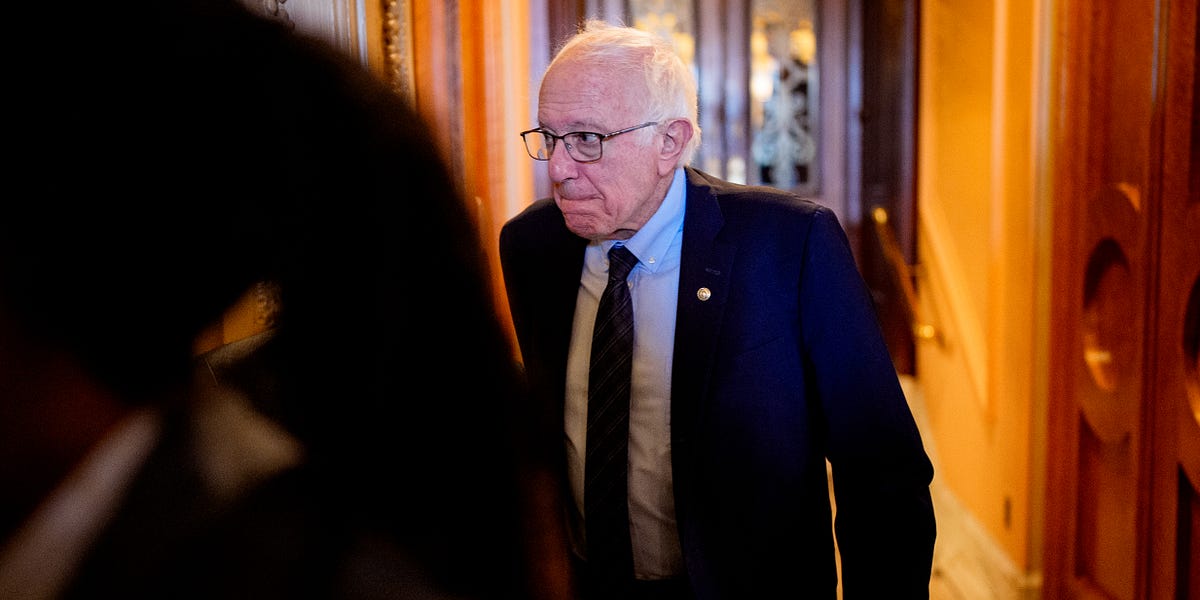
An odd episode unfolded in the Senate on Wednesday night as a years-long effort to pass legislation to streamline drug development and accelerate research for pediatric cancer was about to cross the finish line . . . until it was blocked by Senator Bernie Sanders. While most expected the Senate to send the bill to Trump’s desk via unanimous consent, Sanders announced his opposition to the quick passage of the bill, effectively tabling it until at least the new year. Sanders did not take issue with the intent of the legislation, but opposed other extraneous measures attached to the bill that he argued would make it harder to achieve different health priorities later. Senator Markwayne Mullin blasted Sanders for standing in the way, saying in a statement, “Bernie Sanders has been in Congress since I was 13 years old. He knows good and well the only reason the Mikaela Naylon Give Kids a Chance Act didn’t pass is because he’s the only person who objected to it. If it weren’t for The Grinch, our bipartisan bill would have passed by unanimous consent and become law before Christmas Day.”

On a parallel track, House and Senate leadership are working to pass the twelve appropriations bills that make up a government funding package before the January 30th deadline. After approving three of the bills in November, Senate Majority Leader John Thune was hoping to pass a five-bill “minibus” to fund the Department of Defense, Labor, Health and Human Services and Education, Transportation, Housing and Urban Development, Commerce, Justice and Science, and Interior and Environment, but ultimately left town without passing any of them. Senate GOP leadership attempted to bring up the bills for a vote on Thursday, but Democratic Sens. Michael Bennet and John Hickenlooper blocked the vote in response to White House Budget Director Russ Vought’s decision to dismantle the National Center for Atmospheric Research. Thune offered, “I’m disappointed that we will not be moving to our second package of appropriations bills tonight. Republicans were ready to go. I want this body to know that I remain as committed as ever to funding the government through the regular order process.” Senate Minority Leader Chuck Schumer is committed to advancing funding bills next month, telling reporters, “We want to get through the process and get the appropriations bills done. Our goal is to have full appropriations for the rest of the fiscal 2026 year… by Jan. 30.” Of course, the House will have its say, and the partisan horse-trading will not begin until Senate appropriators reach an agreement on overall bill totals. Stay tuned!
As the year comes to a close, we want to thank you for starting each week with our Monday Morning Memo. We wish you and your loved ones a happy, healthy holiday season and a bright, successful 2026! The Monday Morning Memo will be off next week as our team takes time to celebrate the season with family and friends. We’ll be back in your inbox on January 5th with our 2026 Legislative Session Preview, an in-depth look at what lies ahead in Albany. |  |
We’ll return ready to cover every development in what is already shaping up to be a session worth watching!
In the current economic climate, how much are you spending on the holidays this year? Have your say in our poll below!
Finally, a unique job for one of the world's most expensive nuclear plants in Britain. They are using a deep-sea boom box to protect marine life, but it’s not exactly dropping hits! |


 Listen on your favorite platform!   |  Jack goes ‘From the Lobby"‘ on the latest decisions and dynamics shaping New York politics: 🎙️Why Hochul signed the Medical Aid in Dying Act 🎙️Bombshell poll on the NY governor’s race 🎙️How Zohran Mamdani is gaining ground statewide 🎙️What’s next for Adams and Cuomo? |


In the current economic climate, how much are you spending on the holidays this year? |

If the 2026 General Election for New York governor were held today, which candidate would you support?

 |  |  |



December 22, 1941: Following the attack on Pearl Harbor, Winston Churchill visited President Franklin D. Roosevelt at the White House to coordinate war strategy. The meeting culminated in the lighting of the White House Christmas tree. |


 | Buffalo Sleighs the Competition for Most Holiday CheerWhy was the Queen City crowned the most ‘Christmasy’ city in America? |
Was our Monday Morning Memo forwarded to you? Subscribe here to get it sent right to your inbox.